
Article
How Fertility Clinics Support a Gestational Surrogacy Journey
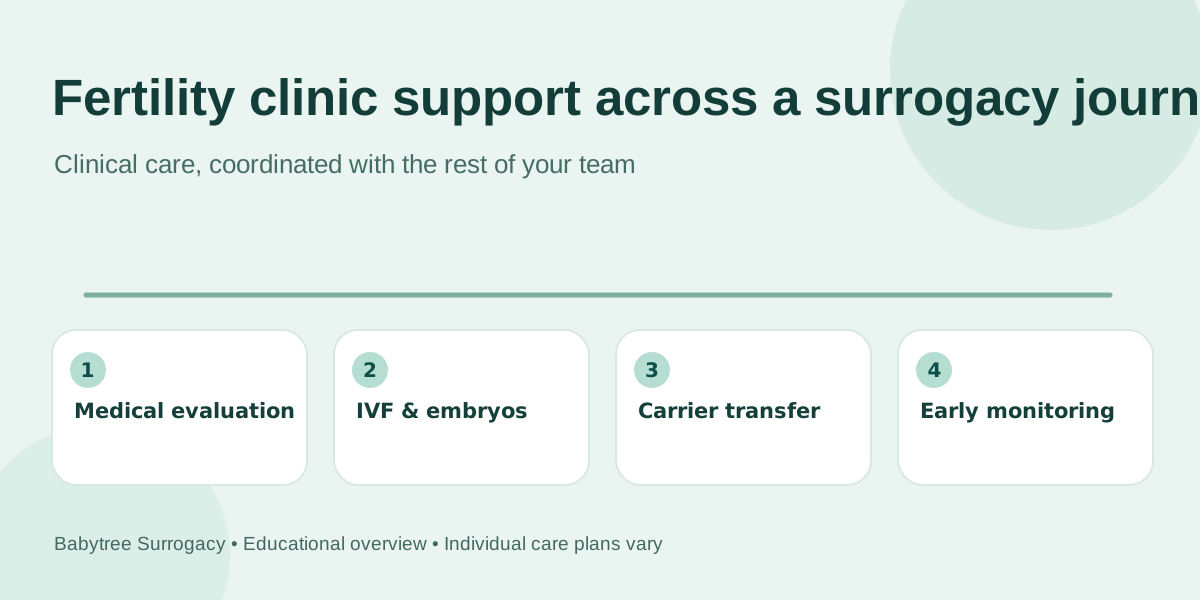
A fertility clinic provides the medical care that makes a gestational-surrogacy cycle possible. Its team evaluates the people providing eggs and sperm, creates or receives embryos, medically screens the gestational carrier, prepares her for embryo transfer, and monitors the early pregnancy. A surrogacy agency coordinates the match and nonmedical journey; independent attorneys handle contracts and parentage.
Knowing where each provider’s responsibility begins and ends helps intended parents compare clinics and plan the next step. Comprehensive support is not a promise that one center performs every service. It means the center can explain its clinical work, referrals, communication, and handoffs clearly. This guide walks through the services to ask about—and the optional treatments that may not belong in your plan.
What Does Comprehensive Fertility-Clinic Support Include?
A fertility center is the medical provider for reproductive evaluation, IVF laboratory work, gestational-carrier clearance, transfer, and early pregnancy monitoring. For a gestational-surrogacy case, ask whether the clinic provides the following services itself or coordinates them with an outside provider:
- Evaluation of the intended parents and the people providing eggs and sperm, with testing tailored to the treatment plan.
- Egg retrieval, fertilization, embryo culture, and cryopreservation when embryos are created at that center.
- Medical screening of a proposed gestational carrier and a documented clearance decision.
- A physician-directed plan for carrier preparation, embryo transfer, pregnancy testing, and early follow-up.
- Secure communication, consent and records transfer, including a handoff to an obstetric provider.
Donor services, fertility preservation, and embryo genetic testing may be useful in some cases. They are not required for every intended parent. Ask the center which services are in-house, what is referred out, and who makes each clinical decision.
How does the clinic work with the agency and attorneys?
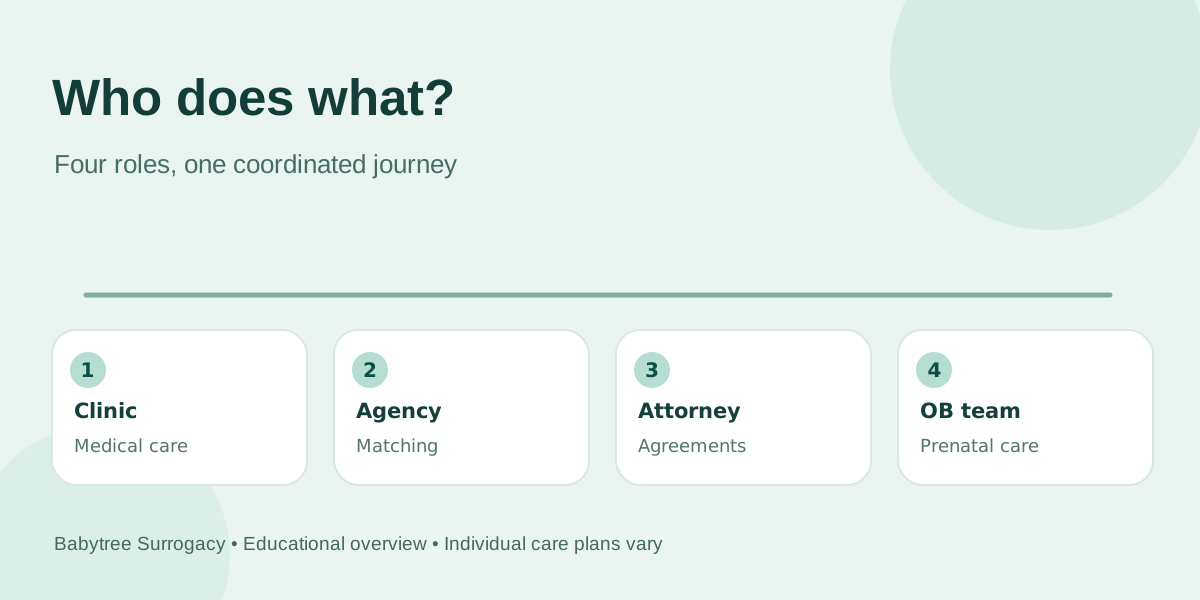
The clinic decides whether a proposed gestational carrier is medically eligible and manages treatment. The agency recruits and matches carriers, coordinates nonmedical steps, and helps participants stay informed. Independent reproductive attorneys prepare agreements and advise on parentage. A clinic may require written legal clearance before treatment begins, but it does not replace either attorney.
Insurance specialists review coverage; escrow providers administer approved payments; an obstetric team takes over routine prenatal care after the fertility clinic’s early-pregnancy handoff. Before you begin, ask each provider who sends the next update, which documents must be completed before medication or transfer, and who answers an urgent question. Babytree’s agency-selection questions can help you compare the nonmedical side of that team.
How is gestational surrogacy different from traditional surrogacy?
In gestational surrogacy, an embryo created through IVF is transferred to a carrier who did not provide the egg. Traditional surrogacy uses the pregnant person’s own egg and is a different medical and legal arrangement. This article addresses gestational surrogacy. Intended parents may pursue it for medical reasons or because their family-building path requires a carrier; LGBTQ+ family building and single parenthood are not themselves infertility diagnoses.
What Screening Happens Before a Gestational-Carrier Cycle?
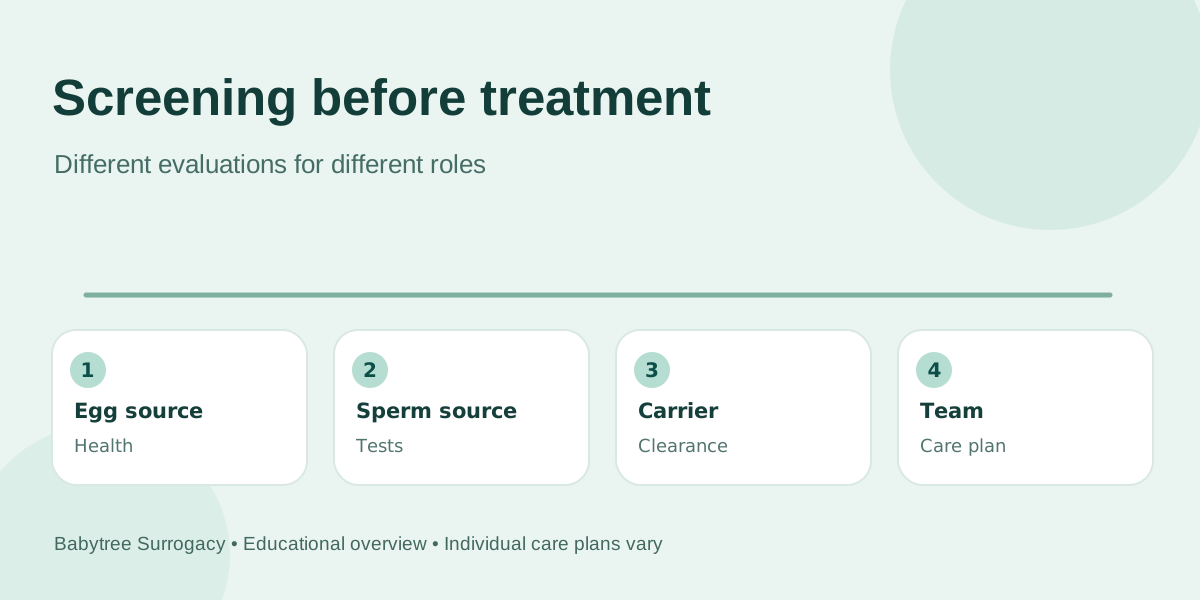
The fertility physician reviews the intended parents’ treatment plan and relevant medical history. Depending on who provides the eggs and sperm, evaluation may include ovarian-reserve testing, a semen analysis, genetic-carrier screening, and infectious-disease testing. A person undergoing egg retrieval needs a separate assessment and medication plan. These tests help the doctor recommend a course of care; a standard checklist cannot substitute for an individual evaluation.
A proposed gestational carrier has her own medical review. The clinic may consider pregnancy history, medical records, uterine assessment, infectious-disease testing, and other factors under its protocol. A qualified mental-health professional may conduct a separate psychological evaluation; the clinic and agency should explain how it is arranged. The treating clinic makes the medical-clearance decision. Screening identifies risks and informs a plan—it cannot guarantee an uncomplicated pregnancy. See the ASRM gestational-carrier practice guidance for clinical context.
Ask for the clinic’s written clearance criteria, expected appointment sequence, and the person who will communicate the result. Also ask how a concern is resolved before medication starts. The gestational-carrier screening guide explains how medical and psychological evaluations fit together without treating them as the same assessment.
How Does a Fertility Center Create Embryos for Surrogacy?
In vitro fertilization (IVF) creates embryos in a laboratory. Eggs can come from an intended parent or an egg donor; sperm can come from an intended parent or donor. The fertility physician reviews relevant history and testing before prescribing ovarian stimulation to the person providing the eggs. That person undergoes egg retrieval. The gestational carrier does not undergo egg retrieval for the embryo she will carry.
In the laboratory, the embryology team prepares eggs and sperm, supports fertilization, observes embryo development, and freezes or prepares embryos according to the clinic’s protocols. Intracytoplasmic sperm injection (ICSI) may be considered for a specific clinical reason; it is not automatic. A semen analysis may help assess male fertility and inform the plan. The clinic should explain how specimens are identified, what happens if few embryos develop, and what consent is needed for storage or transport.
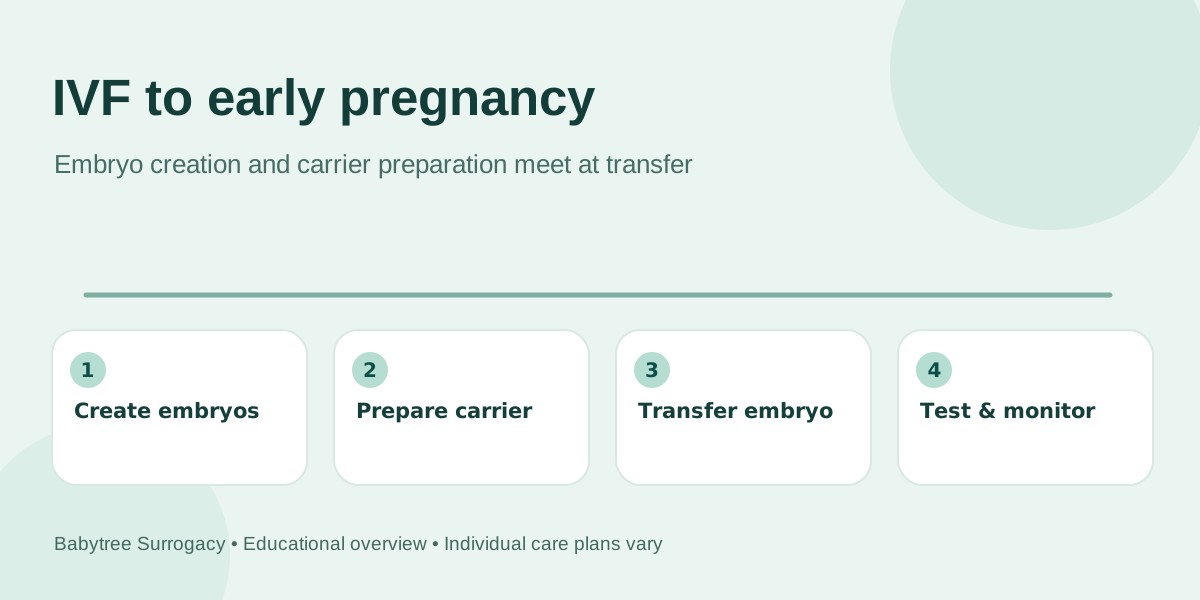
The basic sequence is evaluation, egg-provider stimulation and retrieval, fertilization and embryo culture, then storage or transfer. Embryo creation and carrier preparation can happen at different times. A physician will decide when an embryo is ready for transfer and whether further evaluation is appropriate.
Are IUI, donor sperm, or egg freezing part of the same process?
Intrauterine insemination (IUI) places prepared sperm inside a uterus; it does not create an embryo in a laboratory. IUI is a fertility treatment, but it is not the embryo-creation and transfer pathway used in gestational surrogacy. Donor sperm may be part of IVF when clinically or personally appropriate. Egg freezing is a fertility-preservation option that may occur before a later family-building decision. For a planned gestational-carrier transfer, embryo creation and often embryo cryopreservation are the more direct steps.
Ask whether a donor bank, egg-donor program, or outside laboratory is involved and how records move between providers. The availability of these services varies by clinic; none should be assumed from a generic “full-service” label.
When might embryo genetic testing be discussed?
Preimplantation genetic testing is an optional discussion, not a guarantee of pregnancy. PGT-M may be considered when a family has a known inherited condition. PGT-A examines chromosome number, but its value varies by patient and treatment context. Testing has limits and can affect how embryos are selected. Ask the fertility physician what question a proposed test would answer, what it costs, what its limitations are, and whether it is appropriate for your case. Read more about genetic testing before embryo transfer.
When Does a Fertility Clinic Support Egg Donation?
Some intended parents need or choose donor eggs. The clinic evaluates whether donor eggs fit the treatment plan, reviews relevant clinical records, and coordinates testing, egg retrieval or receipt of frozen eggs, fertilization, and embryo development. Donor recruitment and matching may be handled by the clinic, a separate egg-donor program, or an outside agency. Confirm the arrangement rather than assuming every center has its own donor pool.
Medical, genetic, infectious-disease, and psychosocial screening requirements depend on the circumstances and applicable standards. Independent legal advice may be needed for donor agreements. If frozen donor eggs are used, ask about the thaw and laboratory process; if a donor completes a new retrieval cycle, ask who coordinates appointments and consent. Donor eggs do not guarantee a particular outcome, and not every intended parent needs a donor.
How Is a Gestational Carrier Prepared for Embryo Transfer?
Once medical and legal clearance is complete, the fertility physician chooses a transfer protocol for the gestational carrier. Preparation can include medication, ultrasound, and blood tests to assess the uterine lining and cycle timing. The clinic should explain which instructions go directly to the carrier, which updates go to intended parents, and who handles questions outside office hours.
At transfer, a clinician places an embryo into the uterus through a thin catheter. The clinic provides medication instructions, a pregnancy-test date, and an early follow-up plan. The exact protocol differs by case; a positive test does not by itself confirm an ongoing pregnancy. Ask the treating team about the timing and tradeoffs of a fresh or frozen embryo transfer, instead of assuming one approach is always better.
Why might embryos be frozen before transfer?
Embryo cryopreservation allows embryo creation and the carrier’s transfer cycle to happen at different times. A clinic may use vitrification to freeze embryos, then thaw an embryo when medical and legal requirements are complete. Freezing does not ensure that an embryo survives thawing or leads to a live birth. It can make scheduling more flexible, but outcomes depend on the embryo, patient context, and clinic protocol.
Ask where embryos are stored, what consent and annual fees apply, how long storage may continue under the clinic’s policy, and how transport works if you change clinics. These practical questions matter more than a blanket claim that embryos can be stored “indefinitely.”
How Should Intended Parents Compare Clinic Outcomes?
Start with the outcome being reported: pregnancy, ongoing pregnancy, or live birth. Then check the denominator—is it egg retrieval, cycle start, or embryo transfer? Ask whether the figures use intended-parent eggs or donor eggs, whether they include gestational-carrier cycles, and which years and patient groups they cover. Those differences make headline rates difficult to compare.
The CDC ART National Summary and SART clinic reports can help you frame questions, but historical averages cannot predict an individual outcome. Ask a clinic how it approaches embryo selection, transfer policy, cancelled cycles, and complications. A useful answer explains its methods and limitations without promising a result. This page does not quote a universal gestational-surrogacy success rate because the original figures mixed different populations and measures without a verifiable shared basis.
Which Clinic Costs and Insurance Questions Matter?
Request an itemized estimate for consultation, testing, medications, egg retrieval, IVF laboratory work, embryo freezing and storage, carrier screening, transfer, and early monitoring. Donor services, ICSI, PGT, transport, and additional transfer attempts may add costs when used. Ask which charges are due before treatment, what a cancelled cycle costs, and whether an outside lab or donor program bills separately.
Fertility-treatment benefits, the carrier’s pregnancy coverage, agency fees, legal fees, and escrow are different budget categories. Coverage depends on specific policies and exclusions; a qualified insurance specialist should review them. Ask whether the clinic bills insurance for eligible testing or provides superbills, and who checks the carrier’s pregnancy policy. A clinic’s payment portal or financing offer does not establish what insurance will cover.
For a broader journey budget, review Babytree’s current surrogacy costs and surrogacy insurance guide. This clinical-services article does not repeat a second set of price ranges that could conflict with the main cost page.
Who Handles Legal Clearance and Patient Consent?
The clinic obtains medical consent and may require a legal-clearance letter before carrier medication or transfer begins. Independent reproductive attorneys—not clinic staff—advise on surrogacy contracts, donor agreements, and parentage. International intended parents may need separate advice from qualified immigration or citizenship counsel. A parentage agreement is not a medical consent form, and neither replaces the other.
Ask the agency and attorneys which milestones require signed documents, and ask the clinic what proof it must receive before treatment. The clinic should explain how it protects patient information and obtains separate consent from each patient. When several professionals are involved, a written responsibility list and a named contact for each handoff are more useful than a vague promise of “seamless” coordination.
How Can You Choose a Clinic That Supports the Whole Journey?
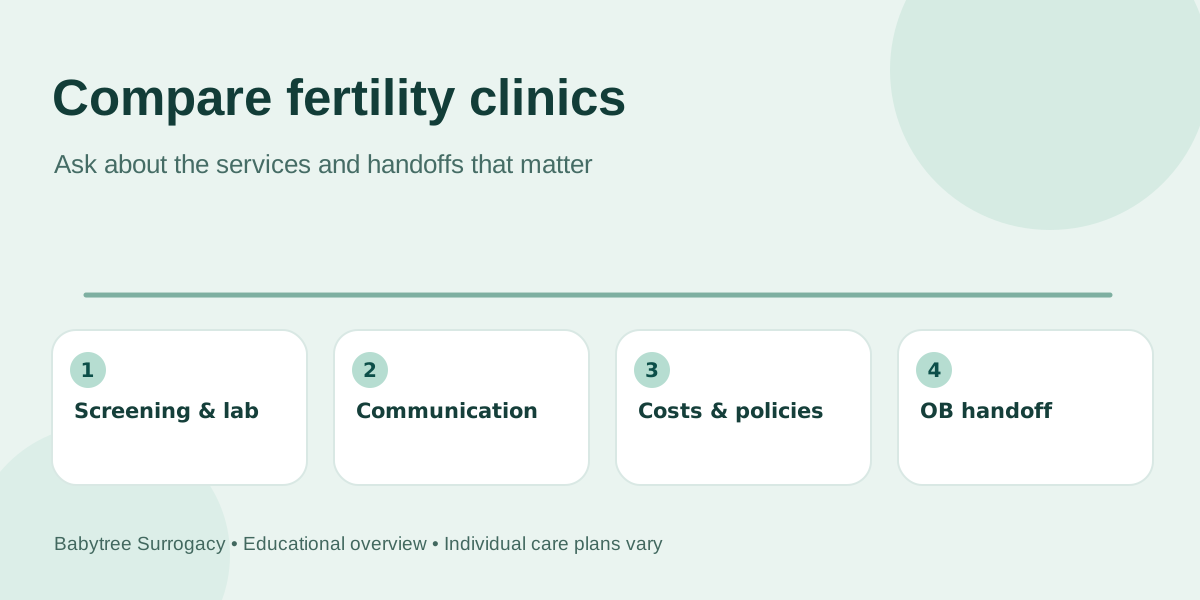
Compare actual services and communication practices, not marketing labels. Take these questions to a clinic consultation:
- Who is the fertility physician for our case, and what gestational-carrier screening is required?
- Which donor, laboratory, and cryostorage services are in-house, and which are referred out?
- How are outcomes reported for cases comparable to ours, and what are the limitations?
- Who answers medication questions after hours? Is there a secure patient portal for results and instructions, or another reliable communication method?
- When do the agency and attorneys receive updates, and what written legal clearance is required?
- Who monitors early pregnancy, and when are records sent to the obstetric team?
- What does the itemized estimate exclude, and what happens if a cycle is cancelled or another transfer is needed?
A patient portal may help with appointments, results and instructions, but it is a question to ask—not a service every clinic necessarily provides. Request a sample timeline and determine who owns each transition. The complete surrogacy process can help you place the clinic’s work alongside matching, legal steps, and pregnancy support.
What Happens After Transfer?
The clinic orders pregnancy testing and, if indicated, follows the gestational carrier through early ultrasound and medication adjustments. The treating physician explains when fertility-clinic monitoring ends. An obstetric provider then manages routine prenatal care and delivery, while the agency continues nonmedical coordination and the attorneys handle remaining parentage steps.
Intended parents and the carrier should know whom to call for a medical concern, scheduling question, insurance issue, or legal question at each stage. A record-transfer and handoff plan reduces confusion when care changes teams. Babytree can help coordinate the nonmedical journey alongside the chosen clinical and legal professionals, but medical decisions belong to the treating providers.
Frequently Asked Questions
Is IUI part of a gestational-surrogacy cycle?
No. IUI places prepared sperm inside a uterus. Gestational surrogacy uses an embryo created through IVF and transferred to a gestational carrier.
Does every intended parent need an egg or sperm donor?
No. Donor eggs or sperm are used when the treatment plan or family-building circumstances call for them. The fertility physician can explain which sources and tests are relevant to your case.
Who medically screens a gestational carrier?
The treating fertility clinic determines medical eligibility. A separate qualified professional may perform a psychological evaluation, with coordination by the clinic and agency.
Does the fertility clinic provide care through delivery?
Usually the fertility clinic manages treatment and early pregnancy, then hands prenatal care to an obstetric provider. Confirm the timing and records handoff with the treating team.
Does PGT-A guarantee a healthy baby?
No. PGT-A provides information about tested embryos and has limitations. A fertility physician can explain whether it is appropriate for a particular case.
What should be included in a clinic estimate?
Ask for testing, medication, laboratory work, freezing and storage, carrier screening, transfer, early monitoring, optional services, and cancelled-cycle charges.
Ready to start your journey?
Whether you're building your family or ready to help one grow, the first conversation is free.